
Trump endgame unclear as U.S. and Iran head to talks in Oman
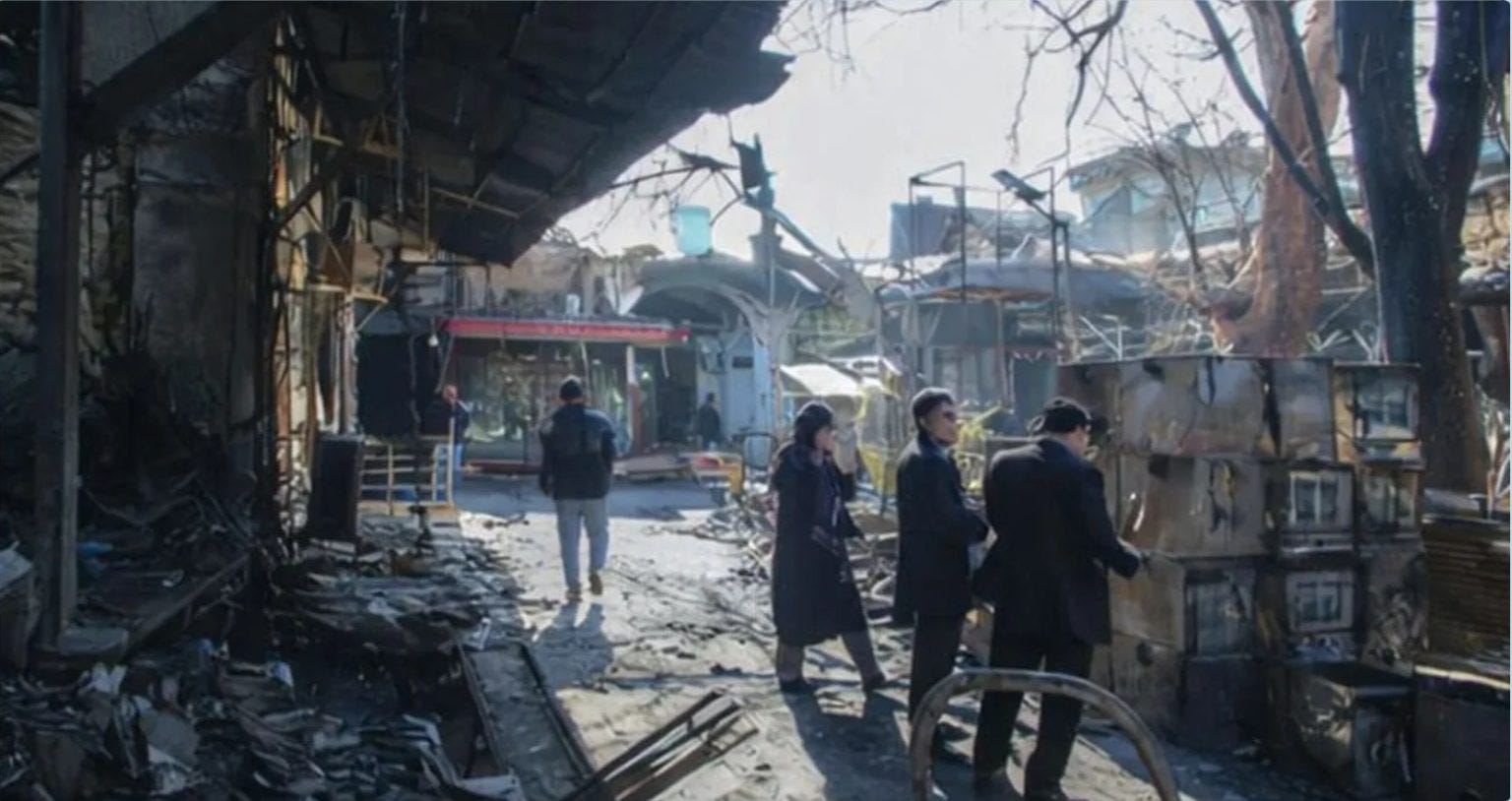
As envoys from the United States and Iran prepare to meet Friday in Oman, both President Trump and the Iranians face a dilemma.
Iranian Foreign Minister Abbas Araghchi is scheduled to meet U.S. envoys Steve Witkoff and Jared Kushner in Muscat, Oman, on Friday, Iranian and U.S. officials said today.
While Araghchi tweeted that the United States and Iran were due to hold “nuclear” talks in Oman, Secretary of State Marco Rubio today laid out a broader list of topics the United States believes would be required to have meaningful negotiations.
“I think in order for talks to actually lead to something meaningful, they will have to include certain things, and that includes the range of their ballistic missiles,” Rubio told journalists at a press conference on the sidelines of a ministerial meeting on critical minerals held at the State Department today. “That includes their sponsorship of terrorist organizations across the region. That includes the nuclear program, and that includes the treatment of their own people.”
“I’m not sure you can reach a deal with these guys, but we’re going to try to find out,” Rubio added.
The “U.S. wants to talk about everything at once, Iran wants to first get a nuclear deal,” Vali Nasr, an Iran expert and former State Department deputy Afghanistan envoy now at Johns Hopkins School of Advanced International Studies, wrote on Twitter. “That gap is more important than venue and who attends.”
But even if Iran were willing to negotiate on all of those issues, which seems unlikely, it is not clear if Trump would feel that he can afford to offer Iran a deal.
On the other hand, even punishing U.S. military strikes that are among the options that Trump is reportedly considering seem unlikely to lead to the regime change in Iran that some anti-regime activists are hoping U.S. military action could bring about. Nor is it clear that they would help protect Iranian people weeks after massive protests have subsided, following an unprecedently violent crackdown that is estimated to have killed thousands of people. Or indeed, if they could cause the Iranian regime to escalate its crackdown on the population.
“Without a viable plan to achieve it, regime change is an aspiration rather than a policy,” former U.S. deputy special Iran envoy Richard Nephew, and former National Security Council official Michael Singh wrote today at the Washington Institute for Near East Policy, where both are now fellows. “The different methods to attempt it are either unrealistic in the context of current U.S. politics (e.g., full-scale invasion) or seem likely to take a great deal of time.”
“And if the United States proceeds with the avowed aim of regime change, the effects might be the opposite of U.S. intentions,” they continued. “The regime might escalate its crackdown on protesters, build up its missiles and proxies, and perhaps even go for a nuclear weapon to stave off its demise.”
Trump looking for a “win,” but his endgame unclear
Trump has indicated that he is looking to declare a political “win” from any use of military force on Iran (or, alternatively, deal the threat of force could help materialize), said Behnam ben Taleblu, an Iran expert and senior fellow at the Foundation for Defense of Democracies.
“Whether or not we debate the utility of diplomacy or the utility of military force, it is unclear what that larger political end goal is for the Trump administration,” Taleblu said on an FDD Zoom today. “If they have a theory of the case for regime change, they have kept it to themselves.”
“There is no clarity as to which one of these military options and political ends the President has chosen or is comfortable with, or the degree to which he might be responsive to external stimuli, and go for one and then change based on battlefield conditions,” he said. “Because I think he is looking for a political win, and he’s looking how to nest the use of force into that political win.”
Regime weakness could make it more stubborn
The Iranian government’s weakness could make it behave more recklessly, and more stubbornly, some Iranian analysts said.
The Iranian leadership “know that they don’t have the ability to defeat the United States in conventional terms,” Hamidreza Azizi, an Iran expert and visiting fellow at the German Institute for International and Security Affairs, who also writes the Iran Analytica Substack, said on an Iran Zoom panel hosted by the Middle East Institute yesterday. “So the question would become, can the Islamic Republic absorb a first strike, preserve command and control, and impose costs at a level that would make sustained U.S. escalation…politically and strategically unattractive.”
“And if you look at all the messaging and movements on the ground on the Iranian side, it all points to this direction of survivability and retaliation capacity,” he said. “There seems to be a consensus among the Islamic Republic security elite that President Trump doesn’t want prolonged and messy wars at high cost. So the only thing they have to do is to make sure that it’s going to be as unpredictable, as messy and expensive in terms of human cost and economic cost as possible.”
Azizi noted that Iranian Supreme Leader Ayatollah Ali Khamenei himself in a speech this week for the first time threatened a regional war if Iran is attacked.
“This is not a sign of strength, of a strong regime,” Azizi said. “It’s a sign of a desperate one. So this desperation can make the regime act suicidally. …. They wanted to send a signal to both domestic and external audience that if the existence of the regime is threatened, we are going to go as far as it takes.”
Arab countries’ caution may influence Trump
Wealthy Gulf Arab states—many of whose leaders hold sway with Trump—mostly despise the Islamic Republic of Iran, but may prefer the status quo to the instability and uncertainty of a messy military intervention that spills chaos into the region and possible blowback on them.
“Most of the GCC countries hate and fear Iran, but they may be ambivalent about the fall of the Islamic Republic,” Edmund Fitton-Brown, a former British diplomat and ambassador to Yemen now at FDD, said on the FDD zoom. That’s explained, he said, by their “proximity, and also,… there’s a kind of a sclerosis and conservatism about some of the GCC countries. They’re nervous about change. They get used to whatever they have to deal with in their immediate environment. And they’ve got used to dealing with the Islamic Republic. It’s not easy, and it’s often seems hostile, but from their point of view, it is a known quantity.”
“And so there will be some people in the peninsula who say, maybe a resurgent Persia is actually… more worrying than a weakened and…chastened Islamic Republic, and so that may be informing some of the reactions,” he said. “But that said, you know, they do adapt.”
With neither a “grand bargain” deal likely achievable, nor a military intervention that topples the Iranian regime, former US officials Nephew and Singh said nevertheless the United States can use the considerable leverage it has to pursue specific concessions from Iran on the nuclear issue, ballistic missiles, human rights, and its regional proxies.
“The Trump administration should be thinking less about a ‘deal’ with Tehran and more about how it can use the threat of imminent strikes to press its demands of Iran on a range of concerns,” Nephew and Singh write. “The United States should make clear that the burden is on the Iranian regime to stave off conflict. As the regime teeters after massacring its own people, the United States has no obligation to rescue it from its own choices.”
**