
Ode to long books
My weeks of reading and relaxation.

One silver lining of the political awfulness of the current era and an allergy to the news is I have submitted to the joy of long books, works I was previously intimidated from starting because it seemed they would take too long to read.
No more. What I have discovered is that the real hurdle is not length, but the initial effort it takes to get into it. But once in, one is absorbed.
Audiobooks, especially those with good narration, help too (both because you can do other things while listening, like walking the dog or driving, and because it frees one’s eyes, which can get tired at a thousand pages of small print), though I do feel I now need to read the print to absorb certain details and information that went by me listening.
The breakthrough for me, as I mentioned in a recent post, was Leo Tolstoy’s War and Peace. It tells the story of a group of Russian noble families, during the Napoleonic wars from 1805-1812, culminating in a paradox: Napoleon’s French army invades Russia and successfully seizes Moscow, then essentially falls apart, starves, retreats and ceases to exist, without a major further battle. In short, they won the battle, and lost the war. From Book 14, Chapter 1: 1812:
The Battle of Borodinó, with the occupation of Moscow that followed it and the flight of the French without further conflicts, is one of the most instructive phenomena in history.
All historians agree that the external activity of states and nations in their conflicts with one another is expressed in wars, and that as a direct result of greater or less success in war the political strength of states and nations increases or decreases. …
An army has suffered defeat, and at once a people loses its rights in proportion to the severity of the reverse, and if its army suffers a complete defeat the nation is quite subjugated.
So according to history it has been found from the most ancient times, and so it is to our own day. All Napoleon’s wars serve to confirm this rule. In proportion to the defeat of the Austrian army Austria loses its rights, and the rights and the strength of France increase. The victories of the French at Jena and Auerstädt destroy the independent existence of Prussia.
But then, in 1812, the French gain a victory near Moscow. Moscow is taken and after that, with no further battles, it is not Russia that ceases to exist, but the French army of six hundred thousand, and then Napoleonic France itself. To strain the facts to fit the rules of history: to say that the field of battle at Borodinó remained in the hands of the Russians, or that after Moscow there were other battles that destroyed Napoleon’s army, is impossible.
After the French victory at Borodinó there was no general engagement nor any that were at all serious, yet the French army ceased to exist. What does this mean? …
The period of the campaign of 1812 from the battle of Borodinó to the expulsion of the French proved that the winning of a battle does not produce a conquest and is not even an invariable indication of conquest; it proved that the force which decides the fate of peoples lies not in the conquerors, nor even in armies and battles, but in something else.
Much to think about for those of us watching the Islamic Republic of Iran seemingly elevated by being able to hold its own and survive against the might of the United States military.
The audiobook, narrated by Thandiwe Newton, is 60 hours long. It was immersive and gripping (especially the family stories) and Newton’s narration is overall outstanding (though found her Germanic-ish accent for Napoleon kind of grating).
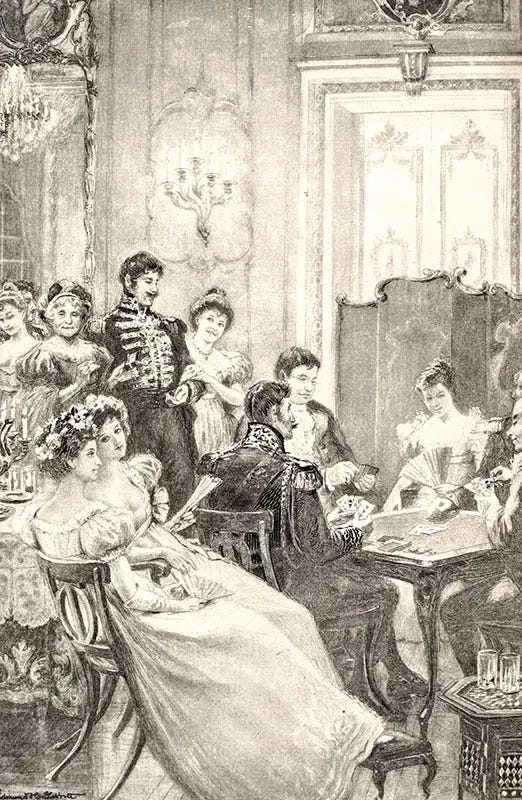
Now I am listening to Marcel Proust’s Remembrance of Things Past, Swann’s Way. The audiobook, narrated by John Rowe, is 20 hours. There are several subsequent volumes.
Next will finally read George Eliot’s Middlemarch, which had started, but left off just when it became apparent that Dorothea is seemingly going to marry the wrong guy and much misery will ensue.
Then maybe the Robert Caro series on LBJ.
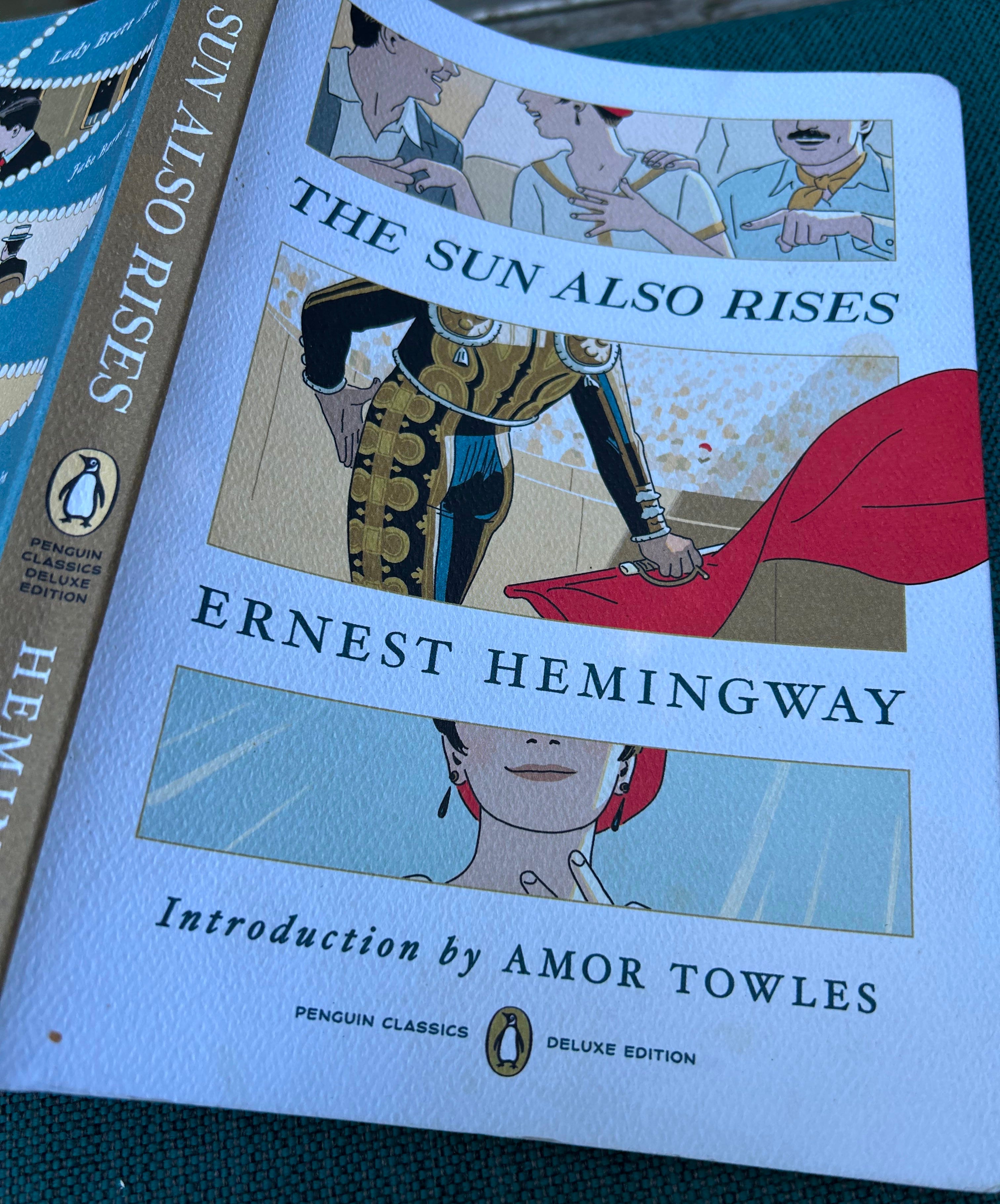
In between the audiobooks, have been reading and rereading (not particularly long) print books, including a beautiful edition of Ernest Hemingway’s The Sun Also Rises, published by Penguin Classics Deluxe Edition, which I picked up on a trip to Pittsburgh a few weeks ago.
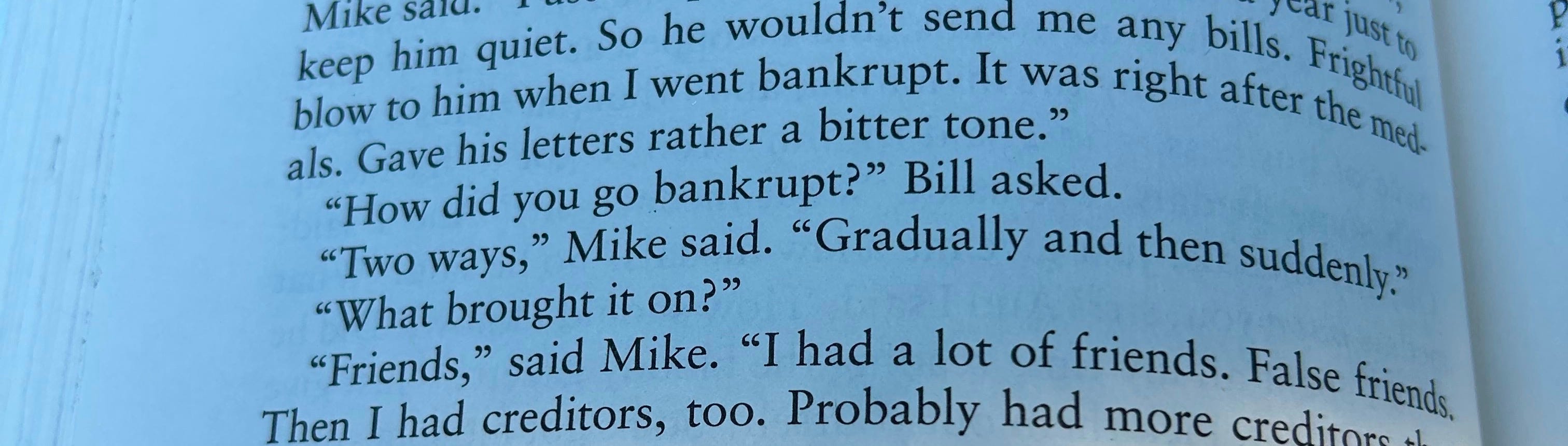
Is there a more insightful two sentences in American literature than these?
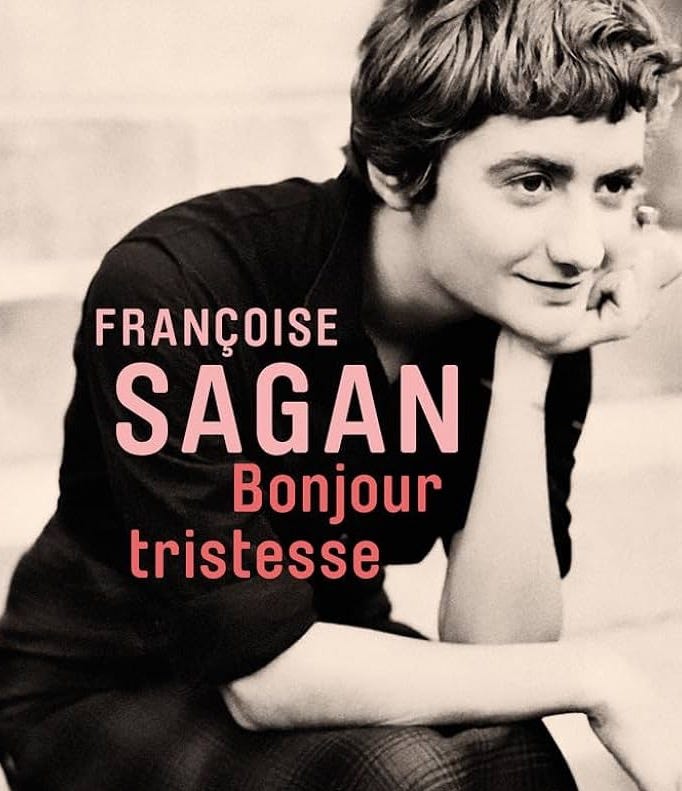
I find with Hemingway that I pick up his novels (For Whom the Bell Tolls, a Moveable Feast, Sun) every ten years or so, and it is like a new book, an urgently gripping page turner. I don’t know how that is. And recently reread Francoise Sagan’s Bonjour Tristesse, which had not read since college (when I think I read it in French).
I find my attention span is increasing. The Pavlovian impulse to check Twitter and one’s phone is reduced. Have missed a couple time sensitive messages, but nothing life or death. Liberating one’s attention span is a good thing, even if in my case it is not an all or nothing proposition.
[My admiration for writer Zadie Smith, who has spoken and written powerfully about “mind control” and the radicalization of being online for hours at a time in the digital age, and the power to look away. “From the very beginning….everything digital, everything online has been talked about as if it’s not ideological, as if it’s neutral. …But it was never neutral. Something that is colonizing your attention, manipulating the way it’s directed, is not neutral.”]
But feel that I am making incrementally better use of my time, and indeed of technology to read and be immersed in some of the finest literature in the world. What a luxury.
**
In the era of communication via emojis, thank you for reminding us of the power of big volumes of words!
Do you still have To The Lighthouse and Beloved to look forward to? I'm deep into Hilary Mantel's Wolf Hall right now.