
Vance warns U.S. strikes will continue if Iran targets ships in Strait
“The Strait of Hormuz is going to be open…If they try to close it down, there’s going to be a response from the American military. It’s just going to keep on happening until they open up that lane.”
President Trump has told the Iranians that the Strait of Hormuz “is going to be open,” or Iran will face continued strikes from the U.S. military, Vice President JD Vance told reporters today.
Vance spoke as U.S. Central Command announced that it had started conducting a second day of strikes against Iran, following attacks by the Islamic Revolutionary Guards Corps (IRGC) on three commercial vessels that used a route hugging Oman’s coast on Monday.
“At the direction of the Commander in Chief, U.S. Central Command forces have started conducting additional strikes against Iran to further degrade their ability to threaten freedom of navigation in the Strait of Hormuz,” Centcom announced. “The United States is holding Iran accountable for recent unjustified aggression against commercial shipping and civilian crews freely navigating a vital international waterway.”

Iranian media reported that the sound of several explosions were heard in southern Iran, in the coastal cities of Bandar Abbas, Sirik and Chabahar. “Additionally, the sound of some explosions was heard from the direction of the sea in the area of the western coast of Sirik,” Iran’s Fars News Agency reported.
An IRGC base in Sirik was targeted, according to an IRGC-linked Telegram channel.
Abu Musa, an island, and Jask were also reportedly under U.S. attack, Iran’ state broadcaster IRIB reported.
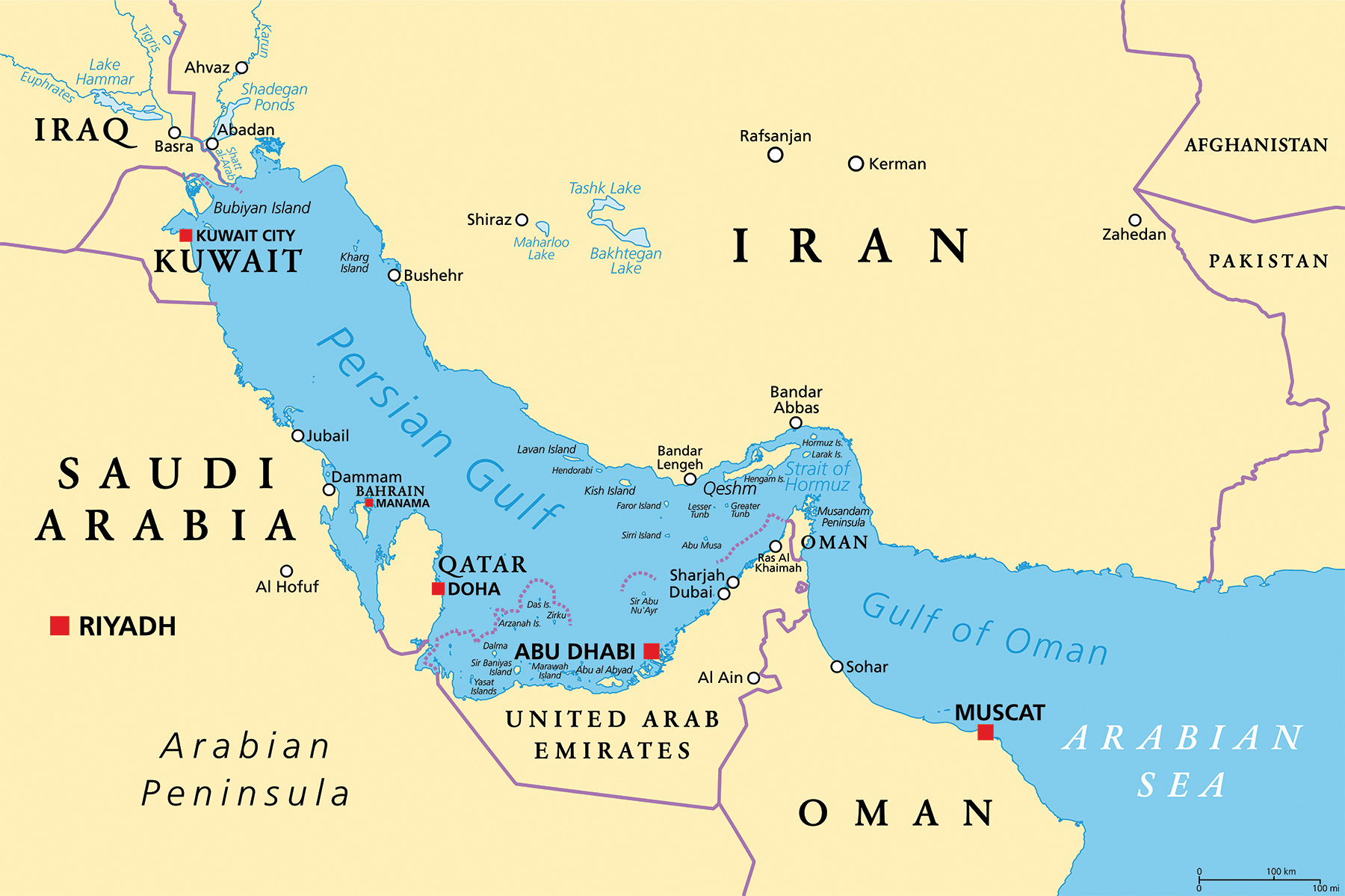
“Reports from Iran indicate that the strikes are both intense and geographically widespread, covering much of Iran’s southern coastal regions along the Persian Gulf as well as the islands overlooking the Strait of Hormuz,” Iran analyst Hamidreza Azizi wrote on Twitter. “The attacks have reportedly included areas around Chabahar and Bushehr, which had not been targeted since the ceasefire was reached in April.”
“Vance: The Strait of Hormuz is going to be open…That’s the deal”
Vice President Vance, taking a few questions from reporters after speaking at a Republican fundraiser in Milwaukee, Wisconsin, said Trump had decided that the US military would keep striking if Iran interfered with shipping in the Strait of Hormuz.
“I’m obviously not going to tell you exactly what’s going to happen tonight, but the President has said to them very simply, the Strait of Hormuz is going to be open,” Vance said. “The President said that crucial artery… has got to remain open, and that is what the Iranians have to know.
“If they try to close it down, there’s going to be response for the American military,” Vance said. “It’s that simple. That’s the deal. They can either follow it, or they can have exactly what happened to them last night. It’s just going to keep on happening until they open up that lane and stop shooting at ships.”
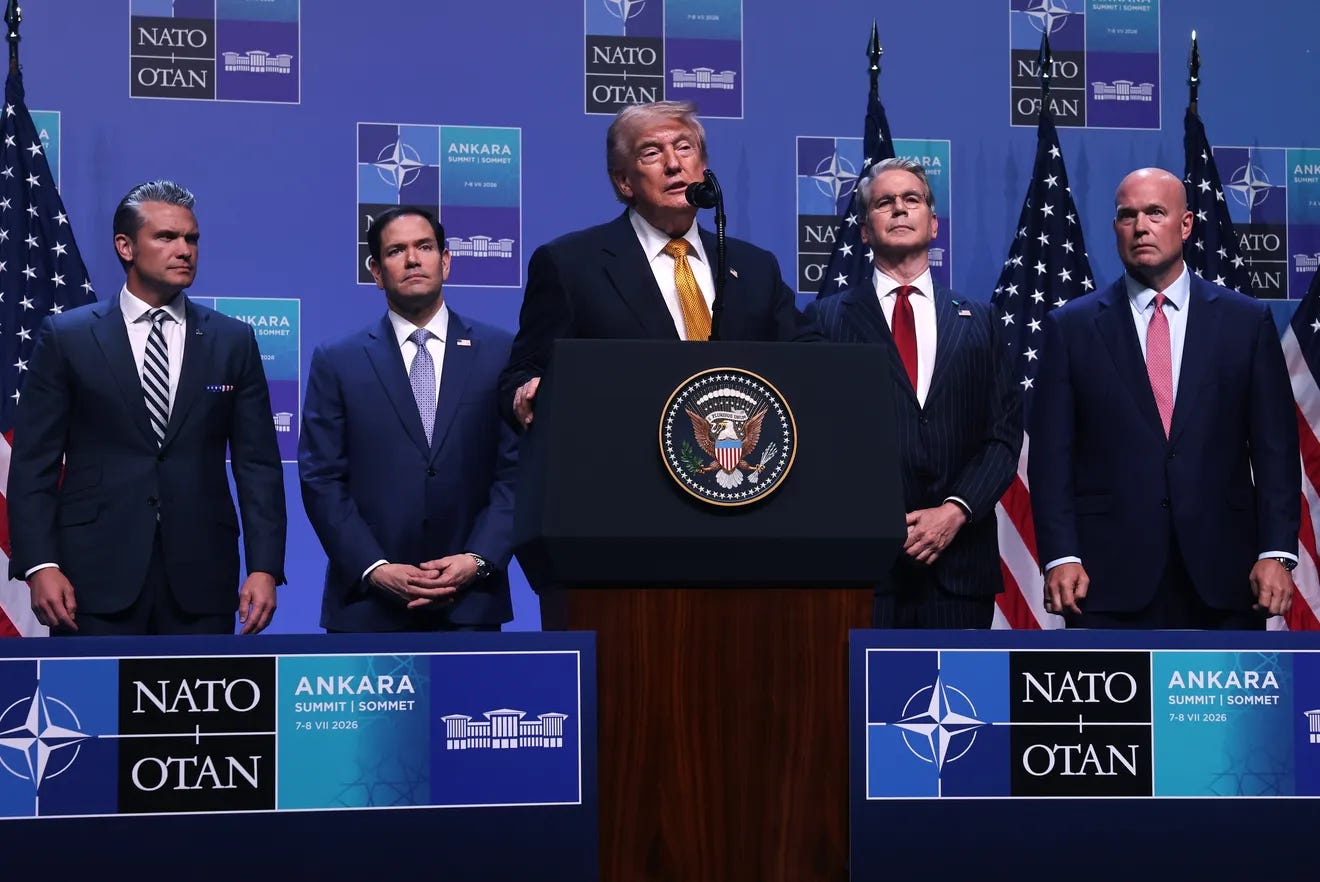
President Trump, speaking at the NATO summit in Ankara, Turkey today, expressed frustration with Iran, and ambivalence about whether he was committed to a memorandum of understanding reached only last month. He also seemed to take offense to apparently being a potential target of an Iranian assassination attempt, though he boasts often about the Iranian leaders that the U.S. and Israel have killed.
“I think they’re a little loco, they’re a little crazy,” Trump said of the Iranians. “Everything’s gone. Their leaders are gone. They had leaders, they’re gone. And they had another set of leaders, they’re gone. Now they have another set of leaders, they may be gone. Who knows, and you know what, I may be gone too, because I’m the number one target. … I’m the number one, because they’re scum.”
But then subsequently asked about it seeming that the Iran war would start again, Trump downplayed that possibility, as he has downplayed how long the war would last from its very first days.
“I think it’s going to go very quickly,” Trump said. “They hit a couple of ships, and so we hit them much harder. When they hit, we hit 10 times harder … No, I don’t think so. I think anything that happens is going to be over very quickly, and we’ll only … make it safer, including for oil.”
“I’m not sure I want to make a deal with him,” Trump said, referring apparently to some unnamed Iranian official. “We can play games, but I’m not sure I want to make a deal. Let’s just finish the job.”
Risk now that full-scale war resumes
Despite Trump’s expressed ambivalence, and Iran’s continued targeting of ships that do not take shipping routes it proscribes, “I don’t think the MOU is dead,” Ali Vaez, director of the Iran program at the International Crisis Group, told me earlier today.
“It shows that the parties never fully stopped trying to win the war during the peace,” Vaez said. “The agreement bought them time, but they used much of it to test red lines, improve positions, and erode the other side’s leverage.”
But the risk of a return to full scale war is growing, said Iran analyst Hamidreza Azizi, who writes the Iran Analytica substack.
“Apart from their scale, another notable aspect of this wave of strikes is that, unlike the previous day, they occurred without any new Iranian provocation in the form of attacks on shipping in the Strait,” Azizi wrote. “From this perspective, the objective is not simply to retaliate or deter further Iranian attacks, but to systematically degrade Iran’s capability to continue targeting shipping in the Strait of Hormuz.”
“The risk now is no longer limited to the possible collapse of the memorandum of understanding, but extends to the possibility of a return to full-scale war between the two sides,” Azizi said.
U.S. Iran MOU Timeline:
June 14: Trump and Vance said they signed Islamabad MOU behind closed doors.
June 18: Trump and Pezezshkian photographed separately signing MOU.
June 21-22: US VP Vance, Iranian Parliament Speaker Ghalibaf, Qatari and Pakistani mediators meet in Lake Lucerne, Switzerland.
June 25: Iran attack on commercial ship that was transiting the Strait of Hormuz along the Omani coast with a one-way attack drone.
June 26: US military conducted retaliatory strikes on Iran.
June 30-July 1: Iran and US held indirect talks in Doha at level of Witkoff/ Kushner, Iran Dep. FM Gharibabadi.
July 6: IRGC struck 3 commercial vessels.
July 7: US revokes Iran oil sanctions waiver
July 7: Centcom struck 80 targets in Iran, including 60 small boats.
July 8: Centcom struck wider set of targets in southern Iran.
The Qataris last week said US-Iran talks could resume after the six-day funeral events for Iranian Supreme Leader Ayatollah Ali Khamenei, assassinated in an Israeli strike on February 28, ends after July 10.
**